
Unlimited tower building
The core game has no fixed floor-count ceiling in the provider description. Each successful floor multiplies the accumulated amount, and the choice remains to cash out or continue. This describes the tower format, not an unlimited cash payout or a guarantee that a climb can continue safely.
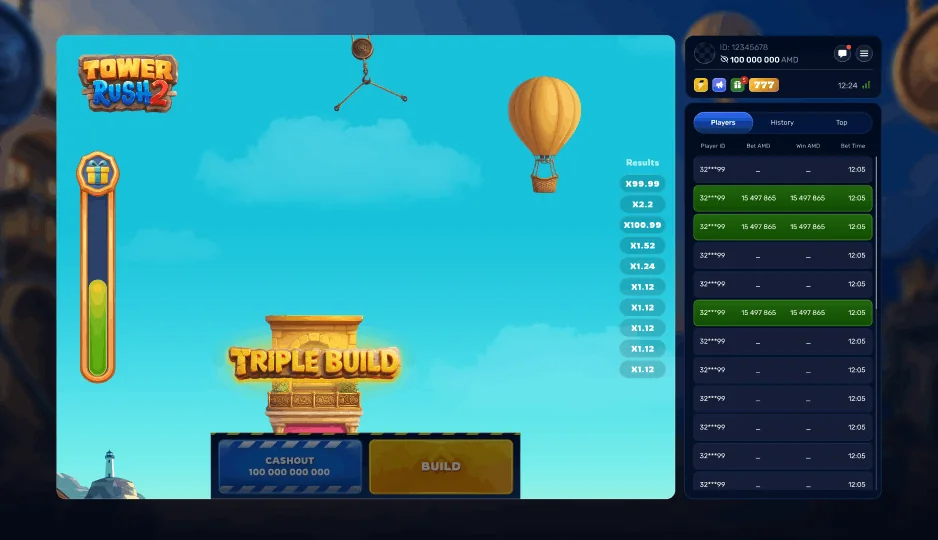
Triple Build: three automatic drops
A randomly appearing Triple Build Bonus Floor starts three automatic drops. Each carries a multiplier greater than 1× and up to 3×. This is its own feature; it is not the ten-floor Bonus Round and should not be described as three free spins.
The feature introduces an automatic sequence into the normal building loop. A multiplier’s upper limit does not mean that the upper value is typical or guaranteed on each drop. Read the settled result rather than assuming three drops will each deliver the maximum.
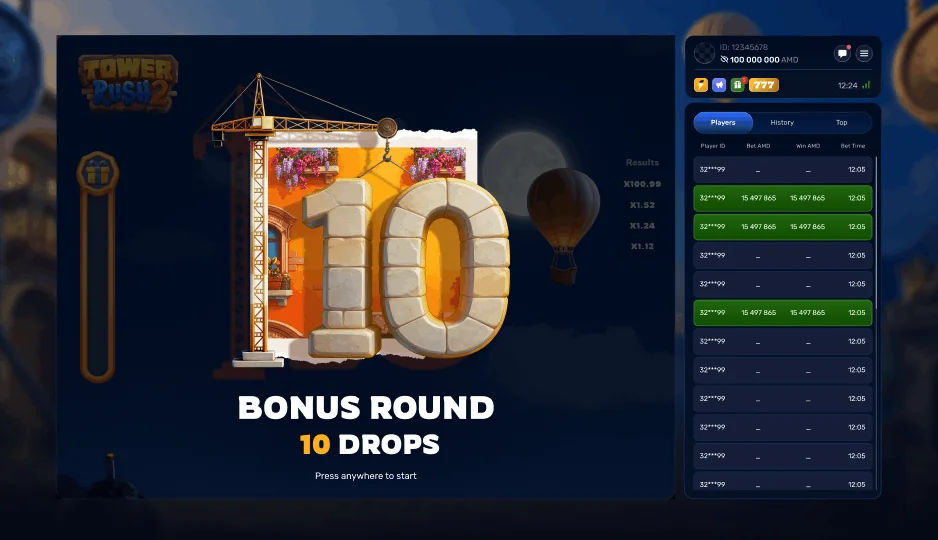
The ten-floor Bonus Round and its 0× rule
The Bonus Round drops ten floors automatically. Floors carry 0× or 2×+ multipliers. A 0× result removes the most recently applied positive multiplier. That reversal rule is the key detail: the provider does not describe it simply as multiplying the entire running amount by zero.
For illustration, if the latest applied positive multiplier was 2×, a subsequent 0× floor removes that latest contribution. Follow the displayed sequence and final result rather than adding all the positive labels together. Ten drops do not mean ten guaranteed positive results.
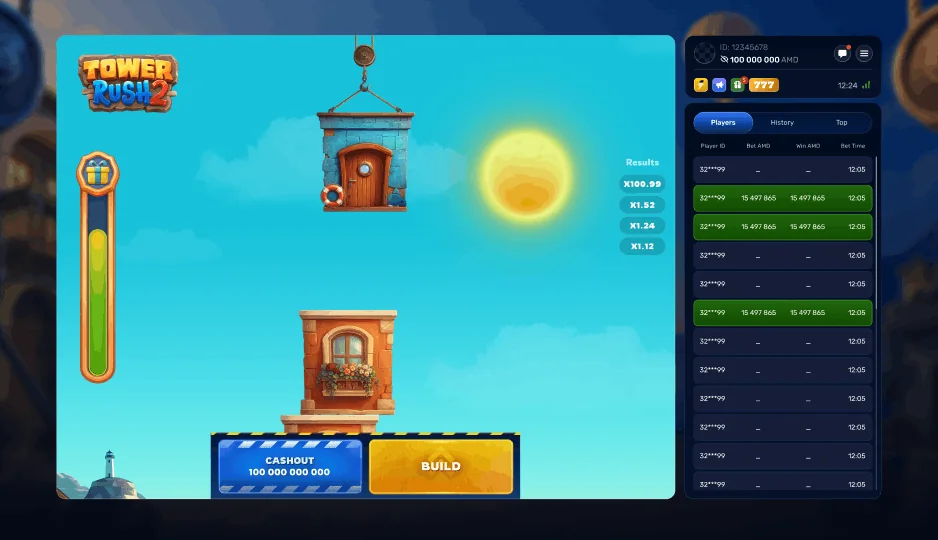
Progress Bar: the automatic route
Each bet contributes to the progress bar. At 100%, the Bonus Round triggers automatically. The public feature description does not specify a universal number of bets needed to fill it, so a claim such as “a bonus every ten rounds” would be misleading.
Check how the meter behaves in the actual client, especially if you change stakes or leave a session. Do not assume progress carries between different operators, accounts or sessions unless the in-game rules say so.
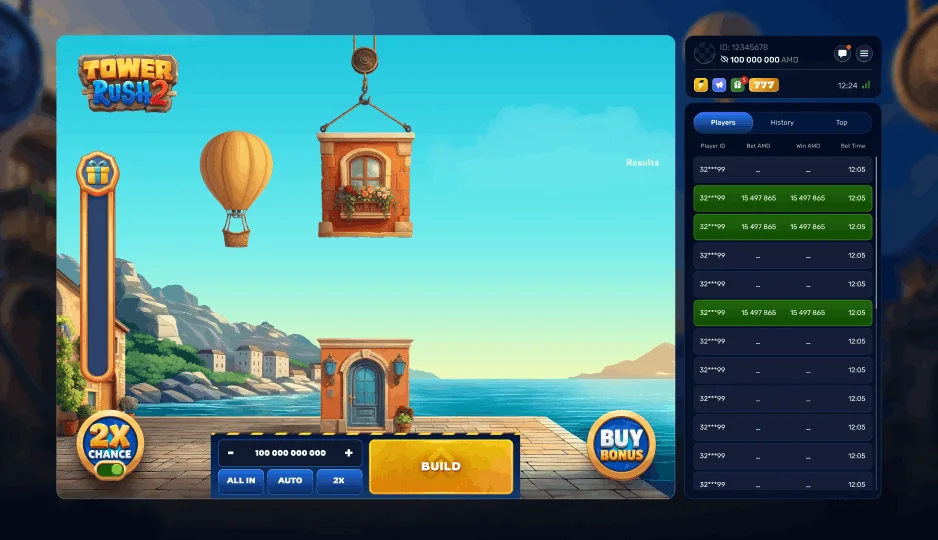
Buy Bonus and Double Chance
| Option | Published cost | Example with a 10-unit base bet |
|---|---|---|
| Buy Bonus | 100× selected bet | 1,000 units for the purchase |
| Double Chance | 25% additional stake | 2.5 extra units; 12.5 total |
| Re-Buy | 70% of the qualifying preceding win | 70 units if that win was 100 |
Buy Bonus purchases entry into the Bonus Round. It does not purchase a profitable result. Double Chance changes the bonus trigger chance for an extra charge; it does not double every payout or guarantee that the bonus triggers. Neither option should be confused with a casino welcome offer.

50% Cashout: banked means banked
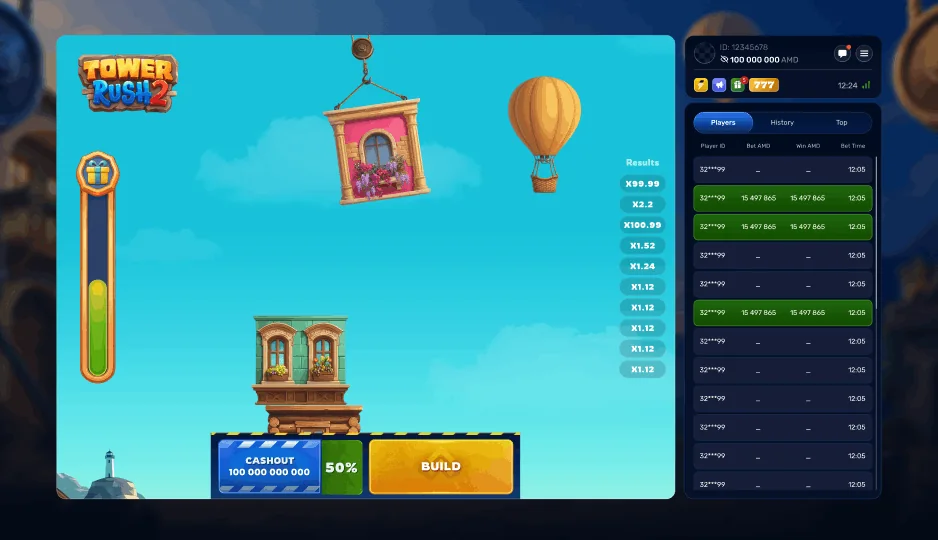
At 3× or above, the game allows you to secure half the current win once. The remaining half stays active. This creates two amounts with different exposure: later outcomes cannot affect the secured half, while the other half remains part of the round.
On a 10-unit stake at 4×, the current gross amount is 40. Partial cashout secures 20 and leaves 20 active. That example explains the split only; it does not make 4× a recommended target.
Re-Buy is a new cost after a loss
Re-Buy can appear after a loss when the multiplier immediately before that loss was at least 10×. It is available briefly, once per round, and requires sufficient balance. The price is 70% of that preceding win.
A 100-unit qualifying win therefore implies a 70-unit continuation cost. That is additional spending, not a refund of the lost amount. Decide in advance whether you will use the feature; a short timer can otherwise turn a loss into a rushed purchase. The offer can be declined.

Questions about Tower Rush 2
Does Double Chance double my winnings?
No. It doubles the Bonus Round trigger chance for a 25% extra stake; it does not double every payout.
How much does Buy Bonus cost?
The published price is 100 times the selected bet. A 10-unit bet therefore corresponds to a 1,000-unit bonus purchase.
What happens on a 0× bonus floor?
It removes the most recently applied positive multiplier in the ten-floor Bonus Round.
Is Re-Buy a free second attempt?
No. It costs 70% of the qualifying win immediately before the loss and requires sufficient balance.